Cybersecurity on Long Island: What Local Businesses Need in 2026
Why cybersecurity on Long Island is a specific problem
Long Island's business community is dominated by three sectors that sit at the top of attacker target lists: healthcare, legal/financial services, and manufacturing. Medical practices in Nassau and Suffolk County handle PHI under HIPAA. Law firms across Jericho, Hauppauge, and Garden City handle privileged communications and client funds. Manufacturers from Melville to Holbrook run production systems that cannot go down.
All three sectors have something in common: they hold valuable data, they cannot afford operational downtime, and most of them run IT environments that have grown organically over 10 to 20 years without a security-first architecture. That combination is exactly what ransomware operators and business email compromise (BEC) groups target.
The three threats hitting Long Island businesses hardest
Ransomware. Ransomware attacks against SMBs have increased every year since 2019. Long Island businesses that have been hit report average downtime of 3 to 14 days and average total costs (recovery, ransom, business interruption) of $150,000 to $600,000 for a typical 20 to 100-person company. The entry point is almost always a phishing email or an unpatched remote access vulnerability. The fix is not exotic — it requires consistent patching, email filtering, endpoint detection, and offline backup.
Business Email Compromise (BEC). BEC is the highest-dollar cybercrime category by total losses, and it disproportionately hits professional services firms. The attack pattern: attacker compromises an employee email account (usually via phishing or credential stuffing), monitors the mailbox for weeks, then intercepts a wire transfer or invoice payment. Long Island law firms, real estate attorneys, and accounting firms are specifically targeted. BEC does not require sophisticated malware — it exploits trust in email.
Credential exposure. Every Long Island business that uses Microsoft 365 or Google Workspace has employee credentials that have almost certainly appeared in a breach dataset at some point. Without multi-factor authentication (MFA) enforced across all accounts, those credentials are live attack vectors. A surprising number of Long Island SMBs still have accounts without MFA because someone found it inconvenient to set up in 2019 and it never got enforced.
What cybersecurity compliance means for Long Island businesses
Two regulations hit Long Island businesses more than any others:
HIPAA. Every medical practice, dental office, behavioral health provider, and healthcare adjacent vendor in Nassau and Suffolk County must maintain HIPAA-compliant security controls — written risk assessment, access controls, audit logging, encryption, and a BAA with every vendor touching PHI.
NYDFS Cybersecurity Regulation (23 NYCRR 500). New York's DFS cybersecurity regulation applies to any company licensed by DFS — insurance companies, mortgage brokers, money transmitters, and investment advisors operating on Long Island. The 2023 amendments expanded requirements significantly: penetration testing, vulnerability scanning, MFA, incident response testing, and annual certification.
What managed cybersecurity actually includes
A proper managed cybersecurity stack for a Long Island SMB includes:
Endpoint Detection and Response (EDR). This is not antivirus. EDR monitors behavioral patterns and can isolate a compromised machine automatically. Every endpoint needs EDR.
Email Security (Advanced Threat Protection). Filters phishing, BEC attempts, and malicious attachments. Correct configuration of DMARC, DKIM, and SPF dramatically reduces the BEC attack surface.
Multi-Factor Authentication. MFA on every account, enforced via conditional access, closes the credential-stuffing attack vector almost completely.
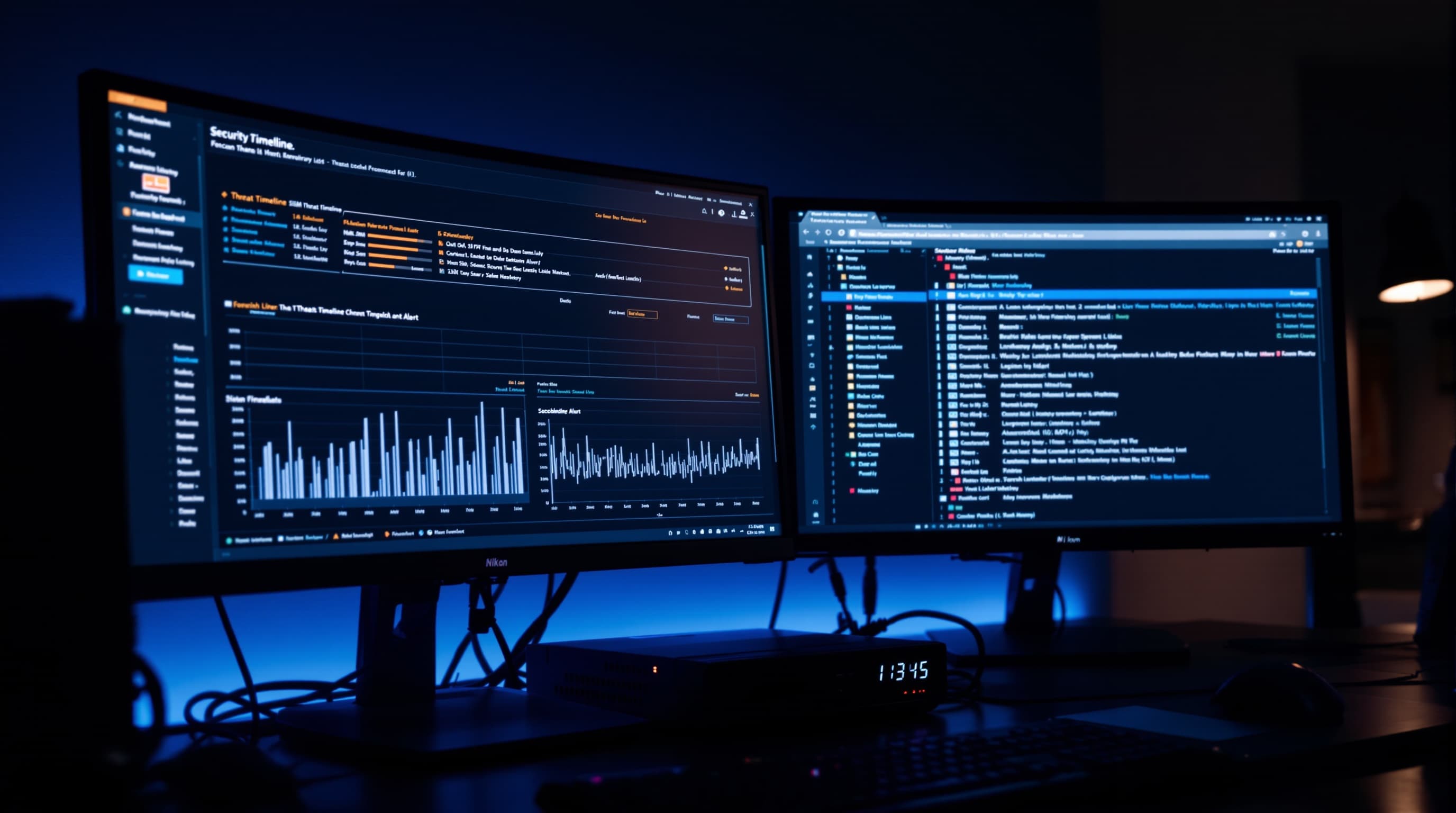
SIEM / 24x7 SOC. A Security Information and Event Management platform collects logs and correlates events to detect attacks in progress, monitored by a 24/7 Security Operations Center.
Backup and Disaster Recovery. Offline or immutable backups that ransomware cannot encrypt, with regular restore testing.
What a Long Island cybersecurity stack includes in 2026
Security is licensed per user, and what changes with headcount is the depth of the stack rather than the shape of it.
| Business Size | What's Included |
|---|---|
| 10–25 users | EDR, email security, MFA, dark web monitoring, backup |
| 25–50 users | Above + SIEM/SOC, vulnerability scanning, vCISO |
| 50–100 users | Full stack + compliance management (HIPAA/NYDFS) |
| 100+ users | Enterprise-grade SOC, pen testing, GRC platform |
These figures reflect 2026 pricing from active managed security engagements on Long Island. They include tool licensing, monitoring, and management labor — not hardware or incident response costs.
Request a free cybersecurity assessment from IT Company Long Island. We will review your current controls, identify your highest-priority gaps, and give you a prioritized remediation plan — no obligation.
Common questions
What is the biggest cybersecurity threat for Long Island businesses in 2026?
Business email compromise (BEC) and ransomware are the top two by dollar impact. BEC specifically targets professional services firms — law firms, accounting practices, and real estate attorneys on Long Island are disproportionately hit. The median loss from a single BEC incident in the professional services sector exceeds $150,000.
Does my Long Island medical practice need a managed cybersecurity provider?
Yes. HIPAA requires a written security risk assessment, access controls, encryption, audit logging, and Business Associate Agreements with vendors. Most small and mid-size medical practices cannot maintain HIPAA-compliant security controls without a managed IT or managed security provider.
How much does cybersecurity cost for a small Long Island business?
A basic managed cybersecurity stack for a 10 to 25-person Long Island business covers EDR, email security, MFA enforcement, dark web monitoring, and backup, and is licensed per user. NYDFS or HIPAA compliance management is a separate line on top of that, because it is ongoing work rather than a product.
Is my Long Island business subject to the NYDFS cybersecurity regulation?
If your business holds a DFS license — insurance agencies, mortgage brokers, money transmitters, investment advisors, premium finance companies — then yes. The 2023 amendments significantly expanded requirements. Many Long Island insurance agencies and financial services firms are still working toward full compliance.
What is the first thing a Long Island business should do to improve cybersecurity?
Enforce multi-factor authentication on all accounts — Microsoft 365, email, banking, and remote access tools. This single control eliminates the credential-stuffing attack vector that accounts for a large share of successful breaches. It can be deployed across a typical Long Island SMB in one to two days.